
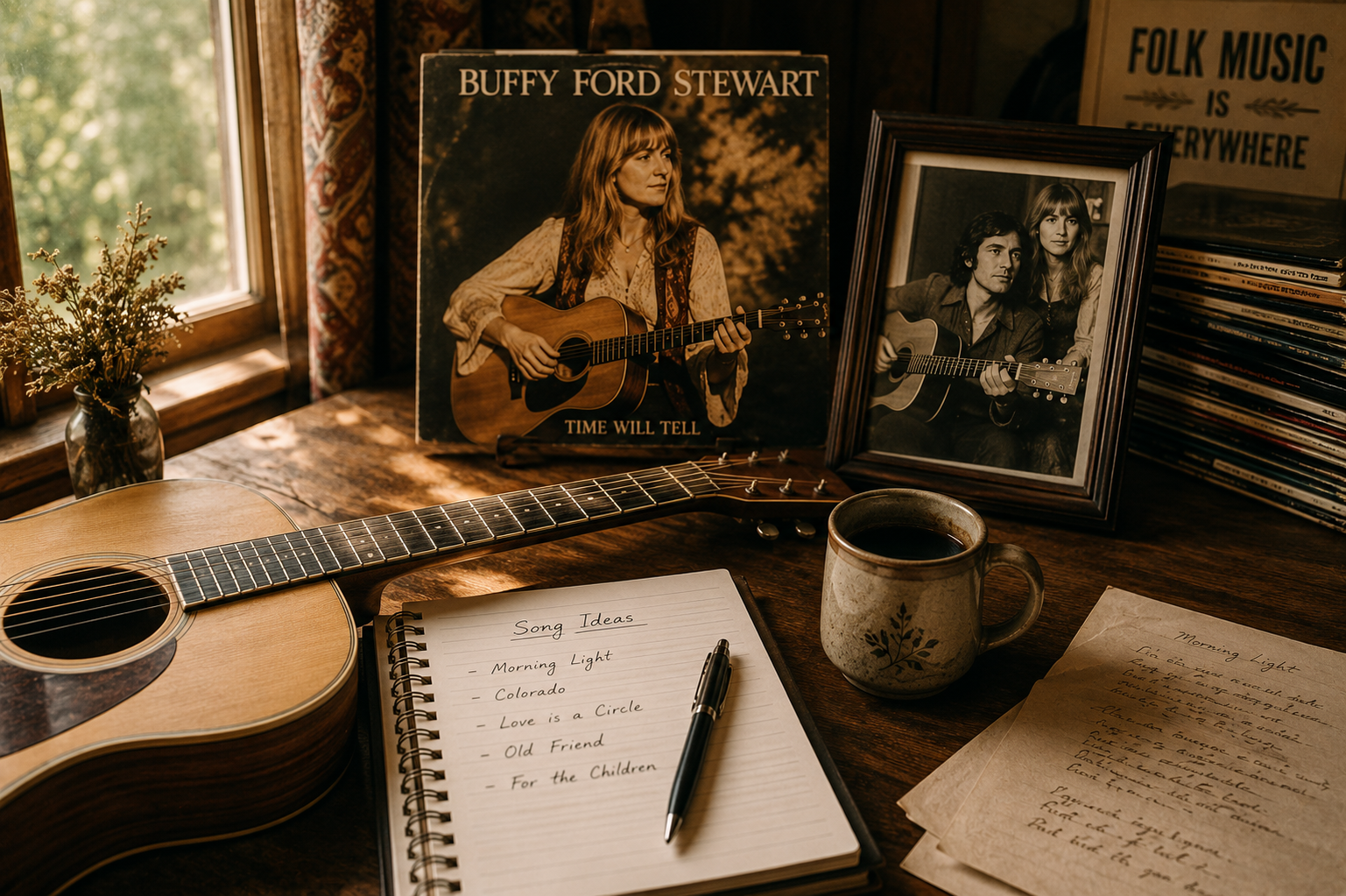
The Quiet Craft Behind Buffy Ford Stewart’s Folk Songwriting
Folk songwriting has a way of making simple things feel unforgettable. A quiet voice, an acoustic guitar, and a carefully chosen line can carry more emotion than a song filled with heavy production. That is part of what makes folk music so enduring. It gives space to honesty, memory, and human experience.
Buffy Ford Stewart’s name belongs naturally within that kind of musical world. Her connection to folk music is not only about performance, but also about storytelling, feeling, and the emotional details that give a song its lasting shape.
A Tradition Built on Stories
At its heart, folk music has always been close to everyday life. It often begins with something familiar: a road, a room, a family memory, a lost love, a passing season, or a feeling that is difficult to explain in ordinary conversation.
That is why folk songs can feel so personal. They do not always try to impress the listener immediately. Instead, they invite the listener to sit with a story. The best songs in this tradition often feel like they were written from lived experience rather than from distance.
Buffy Ford Stewart’s creative identity reflects that same spirit. Her work is connected to a musical tradition where the meaning of a song is carried not only by melody, but also by sincerity.
The Strength of a Simple Song
There is a special strength in simple songwriting. When a song is stripped down, every part becomes more noticeable. The words matter more. The tone of the voice feels closer. The guitar does not hide the emotion; it supports it.
This kind of simplicity has always been important in folk music. It allows the listener to hear the person behind the song. A soft phrase can suggest longing. A repeated chord can feel like memory. A quiet ending can leave more impact than a dramatic finish.
That emotional directness is one reason acoustic music continues to find new listeners. Even as music styles change, people still return to songs that feel human. They look for music that speaks plainly, without pretending to be bigger than the feeling it carries.
Buffy Ford Stewart and the Folk Spirit
Buffy Ford Stewart is known as a singer, guitarist, and songwriter whose name is closely connected with American folk music. Her creative presence is often understood through songs, collaboration, and the wider singer-songwriter tradition.
Her story also carries a strong connection to John Stewart, whose songwriting helped shape an important part of American folk and popular music history. Together, their creative world has long been associated with acoustic storytelling, poetic images, and songs that feel rooted in personal experience.
Yet Buffy Ford Stewart’s place in folk music should not be seen only through association. Her own presence, voice, and artistic sensitivity are part of what gives this story its warmth. She represents the quieter side of folk legacy: the part built through feeling, devotion, and songs that remain meaningful to those who listen closely.
Why Folk Songwriting Feels So Personal
One reason folk songwriting remains powerful is that it often sounds close to conversation. The singer does not need to explain everything. A lyric may only suggest a moment, but the listener fills in the rest with their own memories.
This is what makes folk songs travel so well across time. A song written from one person’s experience can become meaningful to someone else years later. The details may be different, but the emotion is familiar.
That is also why the folk songwriting Buffy Ford Stewart tradition is worth revisiting. It reminds us that music does not have to chase trends to remain valuable. A sincere song can last because it gives listeners something real to hold onto.
The Role of Memory in Acoustic Music
Memory plays a large role in folk songwriting. Many songs feel as if they are looking backward, not with regret, but with tenderness. They hold small scenes that might otherwise disappear: a voice from the past, a familiar landscape, a promise, a goodbye, or a moment of quiet understanding.
In acoustic music, memory often feels especially clear because there is little to distract from it. The listener hears the words, the breath, the rhythm of the guitar, and the emotional weight behind each line.
Buffy Ford Stewart’s connection to this tradition gives her story a reflective quality. Her musical world encourages listeners to think about the relationship between song and memory, between artist and audience, and between personal experience and shared feeling.
A Legacy That Does Not Need to Be Loud
Not every musical legacy is built through constant attention. Some legacies grow quietly through loyal listeners, meaningful songs, and the emotional impression an artist leaves behind.
That kind of legacy can be especially strong in folk music. A song may not always dominate charts or headlines, but it can remain important in a more personal way. It may stay with someone during a long drive, become part of a family memory, or return years later with new meaning.
Buffy Ford Stewart’s folk legacy belongs to this quieter kind of influence. It is connected to music that values warmth over spectacle, story over noise, and emotional truth over performance alone.
Why These Songs Still Matter
Folk songs still matter because people still need music that feels honest. Trends move quickly, but the need for story does not disappear. Listeners still search for songs that help them understand love, loss, change, home, and time.
Buffy Ford Stewart’s creative world offers a reminder of that lasting need. Her connection to folk music points back to a tradition where songs were not only entertainment, but also a way of remembering, feeling, and sharing experience.
That is why her story continues to feel relevant. It belongs to a musical language that does not depend on fashion. It depends on sincerity, and sincerity has a way of lasting.
Conclusion
The quiet craft of folk songwriting is built on honesty, memory, and emotional closeness. Buffy Ford Stewart’s place within that tradition reflects the lasting beauty of music that does not need to be loud to be meaningful.
Through acoustic storytelling and a deep connection to the folk spirit, her creative legacy reminds listeners that a simple song can still carry great weight. Sometimes the music that stays with us longest is the music that sounds closest to the heart.